 Viviana Arcade
 Brain
BrainQuiz games
4 games in this category
Quiz games
This is one of the smallest shelves on the site, and the clearest about what it is for. The four games here share one trait: they put a problem on screen and wait for your answer. Get it right and you continue; get it wrong or answer too slowly and you find out at once. These are made for children, and we report what we saw on opening them rather than certifying who they suit.
Three games that ask about numbers
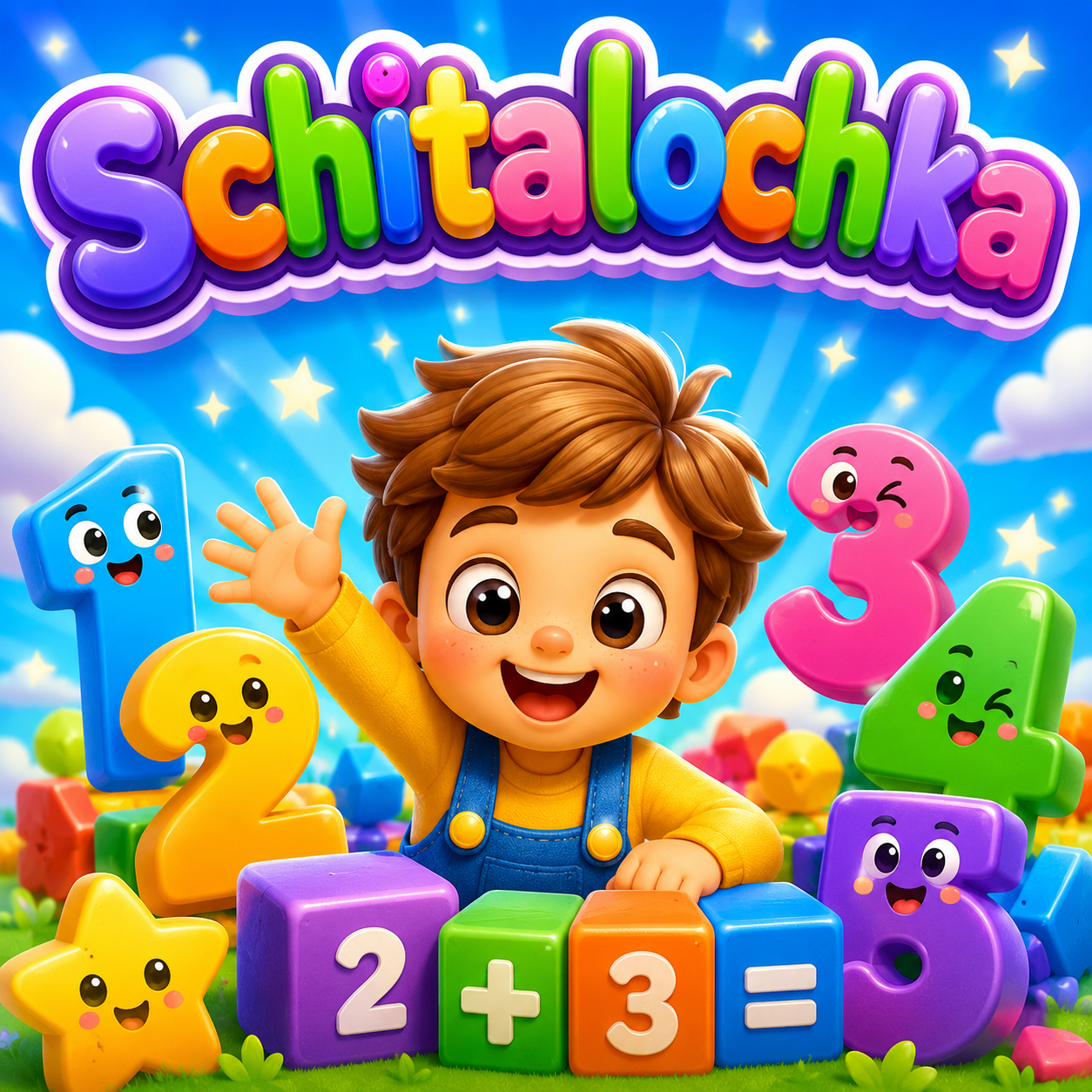
Two of the arithmetic titles carry the exact same name. Both show an addition-or-subtraction problem and want an answer before the timer empties, but they are separate files that open to different screens — the reliable way to tell them apart is the cover image, since the name is no help. The third is Schitalochka, a fast mental-arithmetic game from the same developer that opens on a studio logo before the game itself. All three reward quick thinking over hard problems.
One game whose name does not match it
Crossword For Kids needs a warning first, because the name says crossword and there is no crossword grid in it at all. What we found on opening it was a page of scattered numbers, a countdown clock, and a task to scan for the right number. That makes it a spotting game, not a spelling one — a child who cannot read fluently can still play it. We say so here because trusting the title would lead you to the wrong pick.
No general-knowledge quizzes here
If you came looking for an adult trivia game with questions about the world, it is not on this shelf. All four are basic problems for children, and we do not pad the shelf with other genres to make it look bigger, because a label that matches reality is worth more than a full-looking one.
Common questions about the quiz shelf
The two same-named arithmetic games — are they really different?
Yes. The card name is identical letter for letter, but they are separate files that open to different screens, so they count as two games here rather than one listed twice.
Can these be played without reading the language?
Mostly, yes. Three of the four are about numbers and scanning for numbers, with no words to read, so a child who is not yet a fluent reader can start on this shelf.
Why do these also show up on the brain shelf?
Because they ask you to work out the answer in your head before you respond, which is exactly the definition of the brain shelf. One game can carry several labels for the several jobs it does.